
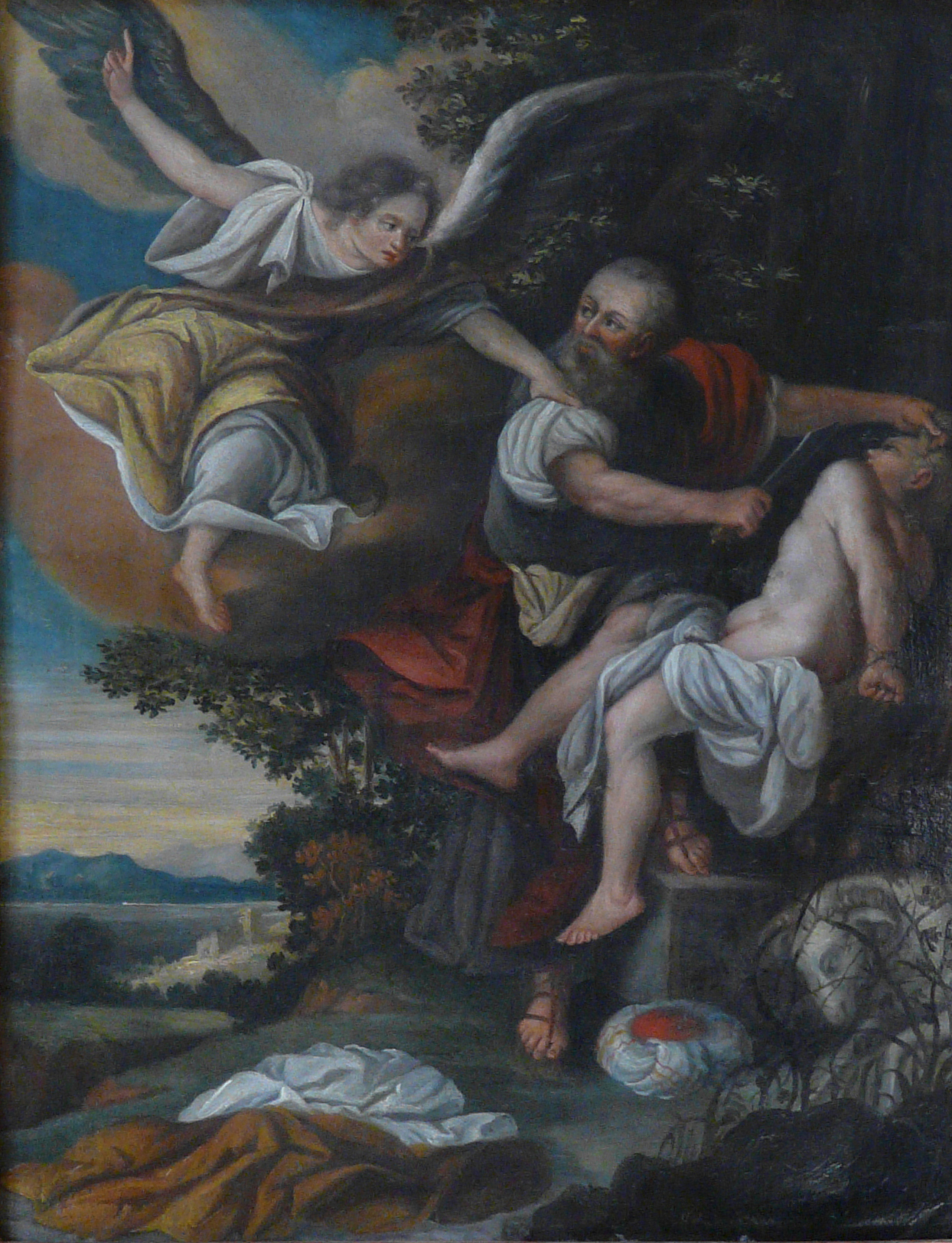
We have just recently read the Akedah (the binding of Isaac) during our Rosh Hashana services. I think all Jews should find this narrative deeply troubling because it seems both totally illogical and barbaric. There is no apparent reason why God would want Isaac killed (who would carry Judaism forward?) nor any seeming reason why Avraham would be willing to do it. Yet, literalists praise Avraham (and Isaac) for mindlessly surrendering both their reason and their humanity to God’s will.
My book provides an extended argument for why this is a terrible misinterpretation of authentic Judaism, but I will not rehearse all of that here.Rather, in this short essay I will provide an example of how a non-literal reading of the Torah–one that regards its narratives as divinely inspired, incomparably great literature–yields deeper and more profound meanings from its text. In fact, one does not have to invent such an apology (innocent explanation), as Judaism’s classic sources offer it.
Midrash Rabbah, Genesis (ch. 56) offers such an interpretation. It imagines that after the aborted physical sacrifice, Avraham questions why God commanded him to kill Isaac, only to call it off at the last moment. This midrash then quotes God reply: “when I said to you: ‘Take you your son,’ I did not say: ‘Slaughter him,’ but rather, ‘take him up.’ I said this to you in affection. You have taken him up and fulfilled My words, now take him down.” This dialog strongly implies that the prophet misunderstood God’s intent.
The midrash then offers a parable that even seems to criticize Avraham:
this is analogous to a king who said to his friend: ‘Bring your son up to [eat at] my table.’ He brought him to him, knife in hand. The king said: ‘Did I say to bring him up in order to eat him? I said: Bring him up out of affection for him.’ That is what is written: “[They built altars on which to burn their sons and daughters in fire, something that I never commanded] and which never entered my mind.” (Jeremiah 19:5)
Various commentators have noted that God never spoke to Avraham following the Akedah, and other midrashim have linked Sarah’s sudden death to her fear that Isaac had been physically sacrificed. This too suggests God’s disapproval of Avraham’s actions.
The Biblical context supports this construal. The Akedah takes place centuries before the Torah is given, and the Sages have criticized Avraham for some questionable decisions that preceded this narrative, including his cruel treatment of Hagar and Ishmael, his endangerment of Sarah first with Pharaoh and then King Abimelech, and his rush to Egypt to avoid the famine, rather than trusting that God would provide. Thus, God may have wanted to instill in Avraham (and Isaac) values that would make their descendants worthy of receiving the Torah. It is axiomatic in Judaism that the ritual of animal sacrifice was offered as a way to draw closer to God. Perhaps the Akedah was God’s way of offering Avraham an opportunity to contemplate the ethics that God intended for humanity, an opportunity that his prophet did not fully seize.
To learn more about the authentic character of Judaism, based on its classic sources, please check out my Come Now, Let Us Reason Together.
Leave a Reply