
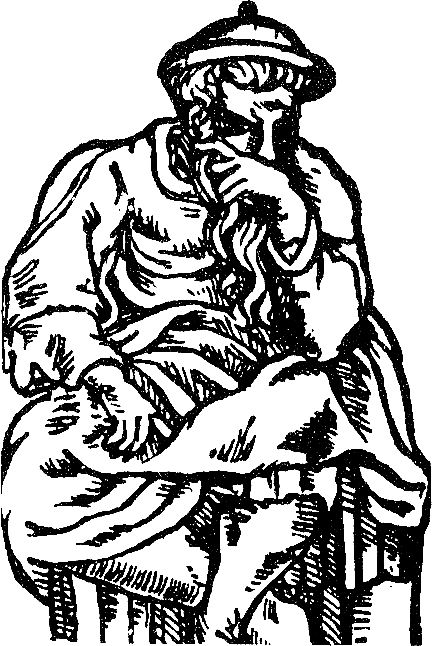
Rabbi Akiva ben Josef (c.50-135 CE) is one of Judaism’s most revered figures. He is widely regarded as the greatest sage of his generation, and historians credit him with being largely responsible for creating the legal framework that, following the destruction of the Second Temple in 70 CE, transitioned Judaism from a Temple-based cult to one grounded in prayer and textual study. The Talmud praises him as a halakic (legal) genius, able to derive legal rulings from the most subtle, esoteric clues.
As for his personal qualities, the Talmud portrays him as preternaturally wise, humble, and kind. So great was his reputation that the Talmud reports that 24,000 students came to learn from him. According to Tradition, he even died as a martyr, bravely enduring being tortured to death by the Romans for daring to teach the Torah. For an Orthodox appreciation of R. Akiva, see Chabad.org, “Rabbi Akiva: His Life and Teachings.”
However, it is likely that there were some Rabbis who thought that perhaps R. Akiva was a little too creative, and that his brilliant legal innovations may have traduced venerable customs and traditions. There is a famous Talmudic story about him that may have been written to allay these concerns (Menachot 29b). It depicts Moses, upon arriving in Heaven, finding God “sitting and tying crowns [decorative marks] on the letters of the Torah.” Moses is puzzled, but the Master of the Universe explains to him that a future genius, Akiva ben Yosef, will one day be able “to derive from each and every thorn of these crowns mounds upon mounds of halakhot. It is for his sake that the crowns must be added to the letters of the Torah.”
Moses is duly impressed and requests to see this maven in action, whereupon God miraculously transports him to the eighth row (the beginners’ section) of Rabbi Akiva’s future study hall. Moses is troubled that he cannot understand R. Akiva’s teaching, but when the Sage responds to his students questioning the source for a certain law by telling them, “It is a halakha transmitted to Moses from Sinai,” Moses is put at ease. In other words, R. Akiva is not making stuff up, as his deep halakhic interpretations are firmly anchored in God’s disclosures to Moses, even if not recorded in the written Torah (the “Oral Law from Sinai”).
However, there is another, largely ignored, Talmudic tale found in Bava Metzia 59b and Sanhedrin 68a, collectively known as “The Oven of Akhnai,” that casts R. Akiva in a far less flattering light. Perhaps the Orthodox, who study the Talmud with feverish intensively and therefore must be familiar with this narrative, do not wish to cast shade on the legend. It is set in the great yeshiva in Yavneh (now northern Israel), established to preserve Judaism following the fall of the Second Temple. While the story is divided into two parts, set forth in two distinct tractates, it seems quite clear that these two units are intended as a coherent whole.
The first part centers on a halakhic (legal) dispute among the sages of this historically important yeshiva. On one side we have Rabbi Eliezer and on the other all his esteemed colleagues, including Rabban Gamliel, Rabbi Akiva, and Rabbi Yehoshua ben Chananiah. The subject of this disagreement is the ritual status of an oven with an unusual construction. R. Eliezer, known as an arch traditionalist, pronounces it “pure” (kosher) and thus fit for use, while all the other rabbis are opposed. Eliezer is convinced that his view is correct and calls upon nature to confirm it. There follows a series of miraculous events that still fail to convince his interlocutors. Finally, a bat kol (heavenly voice) is heard to say, “Why are you disagreeing with Rabbi Eliezer, as the halakha is in accordance with his opinion in every place he expressed [one]?”
One might well assume that this would settle the argument in favor of R. Eliezer, but it is not so. Astonishingly, R. Yehoshua gets to his feet and replies to the bat kol by quoting Moses’ valedictory address to the Jewish people (Deut 30:11-14):
Surely, the Instruction which I enjoin upon you this day is not too baffling for you, nor is it beyond reach. It is not in the heavens, that you should say, “Who among us can go up to the heavens and get it for us and impart it to us, that we may observe it? . . . No, the thing is very close to you in your mouth and in your heart, to observe it.”
R. Yehoshua is implicitly relying on the argument that God has foreseen the death of prophecy and the development of the Oral Law, and has already delegated legal decision-making to the Rabbis, with the majority to govern. Accordingly, R. Eliezer is living in the past, and because he is in the minority, his opinion must be rejected, even if it is correct in God’s eyes.
Things take an ominous turn when R. Eliezer refuses to accept the judgment of all his fellow rabbis. R. Gamliel, the head of the academy, orders that all objects previously ruled “pure” by Eliezer be burned and that he be ostracized. Gamliel justifies this harsh and humiliating treatment of the great sage on the grounds that it is required so that “disputes will not proliferate in Israel.” In other words, that without uniform, binding legal interpretations dangerous divisions may arise. God is not persuaded and gives him a veiled warning, but when it is ignored, Gamliel suddenly perishes, implicitly as punishment for his abuse of his colleague.
The deliberate humiliation of another Jew is a grave crime under Jewish law. As head of the yeshiva, R. Gamliel bears primary responsibility, but R. Akiva did not object to the humiliation of R. Elizer, who had previously been his teacher of many years. It seems obvious that this tale holds Akiva as also culpable for this offence.
This narrative resumes, after an unspecified interval, with R. Akiva, R. Yehoshua, and other unnamed Yavneh sages visiting the still-ostracized R. Eliezer on his deathbed. Their purpose is not entirely clear; but it appears that they are hoping for some sort of reconciliation. Because halakha forbids performing acts of loving-kindness for heretics (i.e., visiting the sick), they inform him that they have come for the purpose of learning Torah, careful to keep the mandated physical distance between them and the outcast.
Things quickly go south. When R. Eliezer asks why they have not previously come to learn from him, they tell him they have been too busy. This does not sit well:
Rabbi Eliezer said to them: I would be surprised if these Sages die their own death, i.e., a natural death. Rather, they will be tortured to death by the Romans. Rabbi Akiva said to him: How will my death come about? Rabbi Eliezer said to him: Your death will be worse than theirs, as you were my primary student and you did not come to study.
The Talmud reports that, when R. Akiva later encounters his teacher’s funeral procession, he:
was striking his flesh in terrible anguish and regret until his blood flowed to the earth. He began to eulogize Rabbi Eliezer in the row of those comforting the mourners, and said: “My father, my father, the chariot of Israel and its horsemen” (II Kings 2:12). I have many coins, but I do not have a money changer to whom to give them, i.e., I have many questions, but after your death I have no one who can answer them.
R. Akiva’s words and self-flagellation evidence a profound regret regarding his relationship with his mentor.
Note that the explanation of Akiva’s death given in the Oven of Akhnai story directly contradicts the Talmudic narrative describing him heroically being tortured to death by the Romans for defying their decree against teaching the Torah. Moreover, rather than celebrating Akiva for his great legal innovations, the Akhnai narrative critiques him for disrespecting R. Eliezer, his mentor, and for neglecting the opportunity to learn Torah from the Sage about whom God declared “the halakha is [always] in accordance with his opinion.”
This story also intimates a direct connection between the esoteric, highly conceptualized character of R. Akiva’s halakhic philosophy and the sudden deaths of his 24,000 students (12,000 study partners) “because they did not treat each other with respect.” (J. Talmud, Niddah, 9:4). Perhaps their master, although mesmerizing them with his halakhic legerdemain, failed to instill in them sufficient reverence for the less philosophically artful but more fundamental Torah command that he is known for citing: “love your fellow as yourself.”
As has been seen, R. Akiva apparently came to believe that he had nothing more to learn from R. Eliezer. If his students came to suppose that they, too, were entitled to formulate bold new legal doctrines derived from their individual psychology and sense of justice, unconstrained by established tradition, one can readily imagine that disputes would multiply and intensify, ultimately resulting in a “lack of respect” grievous enough to violate the law against verbal mistreatment. Accordingly, the story strongly suggests that R. Akiva’s halakhic method is too dangerous to be emulated, at least by mere mortals.
This narrative represents, in my view, another classic example of the Talmud’s love of controversy. These two clashing perspectives of Akiva are left unresolved. We are invited to carefully examine them and draw our own conclusions. I discuss this fascinating story in much greater depth in my Come Now, Let Us Reason Together.
Leave a Reply